Existentialism




On José Ortega y Gasset (1883-1955):
Born in Madrid to parents involved in El Imparcial, a famous Spanish liberal newspaper, he started his studies with a focus on Greek and philology, going on to study philosophy, letters, and law, receiving his doctorate in 1904 for a thesis on the sociological dimensions of history. The following year he went to Germany to study philology and philosophy at the University of Leipzig, then Berlin, then Marburg, receiving a very broad philosophical education. In 1908 he returned to Madrid and entered publishing, working at the family newspaper and founding his own magazine (he became and remained a leading intellectual voice in Spain, deeply involved with a wave of young artists, poets, and political figures), before becoming a professor of ethics, logic, and psychology at a Normal School he helped to found, then at the Central University of Madrid at the young age of 27, where he remained for 24 years. In this time, he married, had his first son in Germany, lectured in Argentina, briefly resigned in protest for academic freedom, and finally, at the outbreak of the Spanish Civil Way, went into exile to France, Portugal, and Argentina. After his return to Spain in 1945, he was restored as a professor, but declined it, instead opening an Institute of Humanities, which was shut down within five years. He travelled and lectured widely afterwards, from Colorado to Chicago to Hamburg and Berlin and Venice. In 1951 he met Martin Heidegger while receiving an honorary doctorate for the University of Marburg. Four years later, he succumbed to cancer, dying in Spain.
While first working in Immanuel Kant’s thought, Ortega’s interests turned to close studies of Edmund Husserl’s phenomenological ideas (as well as an influence by Freud’s psychoanalysis). His philosophy is rich in these phenomenological and existential ideas, as well as socio-political and historical concerns, balancing a focus on the individually well lived life, and the being in intersubjective relation with others in the lived world. Life, for Ortega, is conceived of as a “happening,” it is a fundamental reality wherein human history is a present, meaningful force (his famous insight being “I am I and my circumstances” (Ortega, Obras, 6:347), and being is distinguished from authentic being. “Living is to reach outside of oneself, devoted ontologically, to what is other, be it called world or circumstances” (Ortega, Obras, 5:545). These circumstances are perceived by us through a horizonal theory similar to Husserl’s perspectivalism (experience is revealed in unfolding perspectives or horizons: “every life is a point of view directed upon the universe” (Ortega, Obras, 3:200). His historical interest comes into play here through his idea of the “dynamic dialogue” that occurs in the “drama” of an individual’s lived reality; history is an outlook we take on our world and a quality to our individual existences. Throughout his thought, the individual’s being/life is the root of philosophical study; similar to Heidegger, he posits that a being is a “being-that-lives-in-the-world,” one who is thrown into the world, and living life is a “finding oneself in the world” (Ortega, Obras, 7:422). This idea is strongly emphasized in our short assignment, “Man has No Nature.”
January, Th 16: Ortega’s “Man has No Nature,” pp.152-7, pdf on Blackboard
“Man has No Nature:”
Each human must make him or herself, constantly, dialectically.
A “dialectic” is a form of a circling or spiral-like argumentation; we can speak of a “Socratic dialectic,” by which we mean Elenchos, Socrates’ form of asking questions, receiving answers, undoing the logic of the answer’s implications, and repeating, although the term more familiarly refers to the method of G. W. F. Hegel, wherein the argument makes a never-ending three step of the thesis, antithesis, and synthesis. In the thesis, something is put forth (A); this claim is confronted by an opposing antithesis (~A); the opposition is then moved to a synthesis, which mediates the two proposals, which means that it preserves aspects of A and ~A, and is no final solution, but just raises the argument to a new set of issues. For Ortega, a person first makes him or herself according to a chosen (invented) program 1 (in light of circumstances), comes to believe firmly that this is the true meaning of him or herself, and then encounters its limitations and/or failures when lived through—this is the “thesis.” So, this person then invents a new program 2 in light of both circumstances and the first program—this is the “antithesis,” so named because if program 1 was, e.g., to be a poet and bohemian, program 2 will be to be an accountant and traditional. Just as with the first program, this new one will encounter new difficulties and spur the creation of a new program 3—this is the synthesis—that will try to balance the extremes of the first two programs.
Each human must make him or herself because one’s being (the biologically given) does not coincide with one’s nature (the self).
The meaning of life is one’s programs or projects.
i.e., one’s meaning is contained in what one does, not just as individual actions, but actions in accordance with an invented (given one’s circumstances) ideal of being. For example, Suzy moves to New York’s lower east side, she starts writing poetry, she goes out to cafés, she wears second hand clothes, she buys books on Baudelaire, etc. … but each of these actions is in accordance with her chosen project of identity: as a bohemian.
Given meaning’s location only in one’s programs, this means that one is, initially, nothing—one has no pre-given essential meaning (no essence).
Being, then, is the not-yet (p.154).
Each being confronts innumerable, diverse possibilities.
For example, one could be a writer, a lawyer, a doctor, an actor; one could be lazy, driven, kind, or cold; one can eat at the diner or at home; one can cut one’s hair or dye it or grow it long; one can kill another person, one can kill oneself, one can buy a puppy, etc. Some of these are momentous, some are not; some directly concern one’s self, some do not.
What Ortega determines as key about possibilities is two-fold:
-
(1)These possibilities are not given, but one must find them, albeit given circumstances.
For an easy example, a child of a peasant in 1625 is not going to become the president of the US. However, the subtle examples raise interesting questions about freedom and authenticity, for example, to what degree is a woman in the US in 1952 limited by her circumstances against becoming a leading scientist, or to what degree is a young black boy born in abject poverty limited today from becoming college educated? The cards are well-stacked against both, but how much is one letting societal presumptions force unfree choices upon them, hence inauthenticity, and how much is it mere, icy reality?
(2) Amongst these many possibilities, one must choose.
We are free, but this freedom is a burden, a compulsion. Anything with a fixed, pre-given essence is not free; only what is, initially, nothing, is actually free. This freedom is so extreme so as to mean that the only thing that is fixed and stable about our being is that it is neither fixed nor stable.
Thus … what we must do:
We invent our program of life.
We believe that this invention is the true meaning of our lives.
We enact our program.
We encounter its shortcomings and failures.
We readjust and invent a second program of life … and repeat the above, keeping in mind the dialectical process described above.
We accumulate being as our past.
We then study our history, that one that we made through our chosen programs, so as to know our actual, authentic being.
Questions on Ortega’s Essay:
(1) What counter arguments can be developed against the idea that a human has no nature? How would the existentialist respond?
For example, if the counter is from a religious view—say, the Bible says that we are created in the image of God, hence must have a fixed, pre-given meaning—how can a religious answer still be existential? Perhaps, one asks how are we in His image? If it is by free will—for it seems obvious that we are not omnipotent, etc.—doesn’t this allow for individual creation of character so as to be justly punished if we sin, etc.? Or, if the counter is from a view of biological reductionism, how does one argue that we are not our genes or DNA? Etc.
(2) Are we the not-yet or the history of our programs? Are we what we do or what we have done? Is there a way to understand these as not conflicting?
(3) What is the tension between possibilities and circumstances? How are we to judge whether or not we are truly authentic?
(4) Freedom indicates a lack of fixity, but is a compulsion (p.156)—what, then, gives us the duty or force to freedom? Why MUST we choose? Says who? Or, to what consequence?
“If the reader reflects a little upon the meaning of the entity he calls his life, he will find that it is the attempt to carry out a definite program or project of existence. And his self--each man’s self--is nothing but this devised program.”
--Ortega, “Man has No Nature,” 154.
Sunday, January 3, 2016
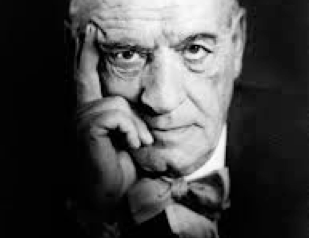


José Ortega y Gasset’s “Man has No Nature”